Tuesday, August 21, 2007

One Guy's Perspective

(I wrote this in reply to a question my cousin asked while I was deployed back in 2004)

Hi Jackie~

Thanks for the note. Yes it is a bit different here than what you see on TV. Though in some respects, it really isn't. As we all know, the news just doesn't show you the good things that are being done, because that isn't sensational news. Death and destruction, now THAT's news!

Unfortunately there really is destruction going on here. The bad guys are really bad, and they are doing their level best to make it as difficult as possible for the US troops here. I am stationed in Kuwait, but every other day I fly up into Iraq with guys either going home or coming in, and I get to talk to them about the way things really are. Basically its not a pleasant life. Most bases get mortared on a regular or semi-regular basis. If you drive anywhere in this country you need to expect to encounter suicide bombers and roadside booby-traps just waiting for you to pass by. It is not a peace keeping operation by any stretch of the imagination. It is a war and two or three guys and gals are dying every day. There are probably 5,000 to 6,000 insurgents running around the countryside trying to create havoc, and they do a pretty good job of it. They have a bunch of plastic explosives, shoulder fired missiles, anti-tank rockets and artillery shells, and they are good at making them do a lot of damage.

One of the big problems, as I see it (remember, you asked my opinion, which doesn't mean a whole lot in the big scheme of life....) is we are trying very hard to do a big war operation on a shoestring budget. There is an old adage that says there should be so many soldiers for every so many civilians you are trying to control, something like 1 or 2 for every thousand. We are trying to hold territory with like 1 guy for every 10,000 civilians. (I don't know the exact percentage, but we could figure it out if we wanted too. Take the population of Iraq and divide it by 130,000 troops). Anyway, think of the town you live in. How many police officers do you have to patrol your town. I live in town of 3500 people, we have about 8 officers to cover all the shifts. That's about 1: 500. Now think of a country that has been beaten and repressed for thirty years. Suddenly all authority is gone. There's no police, there's no army or national guard. People who have nothing are well armed (everyone has a machine gun in Iraq) and can pretty much take what he wants as long as no one shoots him. That's the situation that happened here after we showed up and marched into Baghdad.

When the Generals were asked how many people it would take to beat Saddam, they said 250,000. That's a pretty good sized force and pretty close to what we used in the Gulf War back in 1990. The Secretary of Defense didn't like that number as it was pretty expensive. He searched around and found someone who said it could be done with 50,000 troops or less, and that is probably an accurate assessment. The Iraqi army was so bad and so ill equipped that it really only had numbers, not a viable fighting force. The Generals protested and negotiated enough to get the numbers up to 130,000 troops, which was probably a good thing. Overkill for the initial rush, but way too few to maintain order afterward. The problem came AFTER US forces raced 350 miles into Baghdad and took over. It started when we began trying to supply ourselves and set up bases. The guys in the Iraqi army who still had any anger melted away, picked up weapons and started a sniper war on our troops and convoys, and anyone else they decided they didn't like.

That stuff is still going on. By not being able to maintain order, not only do we have the original baddies angry at us, but now all the folks who have been hurt by looting, robbery and random violence are ticked off too because we came in, disbanded whatever security forces existed and left them without any protection. On top of that, we put about 35,000 to 50,000 police and army folks out on the street and into unemployment. Any reason why we should be well liked after that?

Some questions everyone needs to ask themselves are these:
  • How did we get here?
  • Did we really need to come here in the first place? (what were the reasons to start this thing, and do they stand up to scrutiny?)
  • Now that we're neck deep in this, what outcome do we want out of this?
  • What is the plan to achieve it?
  • Who, if anyone has a real plan? (Does beating one's chest on TV and saying "I have a plan!" make it so?)
  • What comes next?
  • Do we have a plan for that? Will we? It's your tax dollars, your homeland security, your brothers and sisters going off to fight the next battle somewhere... (Can we afford NOT to go out there and get the bad guys where they live?)
  • Who in government, or which government wannabe, has the best chance to get it right?

Maybe the best thing to do is not look at the candidates, but look at who their advisors are and see if you really trust THEM.

Voting is a hard thing. You only get one chance at it every couple years, then you have to live with what the majority of people believed was right at the time. You can base your vote on your stand on firearms, abortion, gay rights, foreign policy, healthcare, tax cuts, social security, the environment, job creation, the economy, etc. but I think the trick is to try and pick someone who you think gets the most right, because there is no way anyone can be right on every one. The issues are too diverse for 200 million people to agree on. Our school district back home is a classic example. The district is growing so we need new buildings, more teachers. Healthcare cost rise every year no matter what we do. Some people don't want to raise taxes to cover such things. They would prefer that programs get cut and no new teachers hired. The result is kids have nothing like sports or band or clubs to participate in so they find their own things to do... The classes get bigger, the kids learn less, they lose interest, drop out, and find their own things to do... We pay city taxes to increase the police force and build better jails. No one wants more money coming out of their pocket, but for every choice is a consequence. Sometimes you have to vote for the benefit of the group, not just yourself.

Wow, guess I waxed on there pretty good, didn't I? The short answer to your question is that from my perspective, we are going to be here a while. A LOT of US tax dollars are going to be spent here, both to support the troops (who really need it) and to rebuild a country that a dictator completely ruined. There is a lot of work to do. The young soldiers here are doing a great job, and they need all the support they can get, because it is the people back home that validate what they do. The best thing that you can do is get out and vote for the candidates you think will do the best job of taking care of them, and our country. It's not just an office or a job these days. Now, more than at any time in the recent past, these people make decisions that affect people's very lives.

Hope you and yours are doing well. Thanks so much for the update on Uncle Don and his induction celebration. We couldn't be prouder!

Take care,

Bryan

Wednesday, October 19, 2005

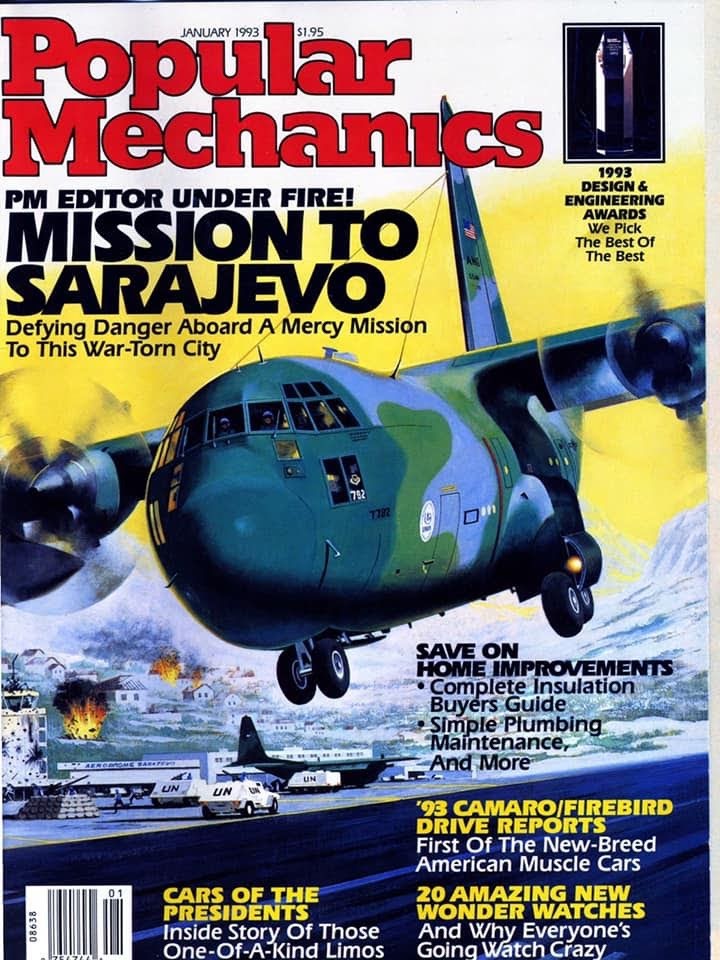
Mission to Sarajevo

 The Balkan conflict of the 90s was a real mess. When Tito died in 1980, Yugoslavia started falling apart. It was a country that had been used to being ruled autocratically since the Second World War. They sputtered on for about 10-12 more years, but after the Berlin Wall fell, there was no “umph” left in dictatorial rule, so it dissolved in spring of 1992 into Croatia, North Macedonia (Macedonia is a state in Greece where Alexander the Great is supposedly from, so there is NO WAY they are giving up their name), Slovenia, Montenegro and Serbia.


Simplified: as is typical in old, well established areas that have been forced to live together against their will for decades, a lot of old animosities simmer, and they boiled over when Bosnia (Muslim) attempted to separate itself from Serbia (Orthodox). The US got involved as part of a NATO peacekeeping force when the killing in Bosnia got too severe, and the city of Sarajevo was surrounded and in the process of being starved out.

I think I flew to Rhein-Main AFB in Germany sometime in September. For the next two to three weeks, as part of a NATO humanitarian relief effort called Operation Provide Promise, we flew plane loads of relief supplies pretty much every other day. My missions were all airland, but later guys were doing high altitude airdrops of MREs (Meals Ready to Eat), where large refrigerator boxes would be pushed out of the plane and then fall apart, raining plastic packages the size of bread loaves containing basic meals down on people’s heads all across Bosnia.

We would load up in Germany, fly over Austria, down the Italian coast, then across Croatia into Bosnia. All high level. We flew high because the Serbs were using anti-aircraft guns mounted up in the hills overlooking  citites and towns to shoot down into them, and we didn’t want them to start aiming them up at us.
About 50 miles out we would start talking to the French air traffic controllers who were controlling the air traffic in and out of the Sarajevo airport. We all had slot times we had to make +/- a minute or so. Once we were cleared in we would press into about 25 miles, over the top of a pretty significant valley, slow down, drop flaps to provide drag, and then pretty much drop out of the sky in a very significant manner. I would call out distance to go and required altitude to remain on glide slope to the airport. All to attempt to stay above any groundfire that someone on the hillsides might decide to aim our direction. 

Then we had to make sure we landed within the first 2/3s of the runway, because the Serbs were firing those anti-aircraft weapons (cannons) across the runway into the apartment buildings across from them. If you were too fast and felt you couldn’t land and stop in time, you were to abort the landing, and try again, climbing out as fast and as steep as you could. It was quite a rush.

We would taxi into the parking ramp, turn and back up to the main building, drop our ramp, using the airplane as protection for people unloading in the back…small comfort for us sitting ducks up in the cockpit. Passengers would rush off, cargo would be pushed off on to awaiting forklifts, new passengers waiting to get out would rush on, we would close up and taxi out, taking off pretty much empty from mid-field. I started timing our total time on the ground after about the 2nd mission. I think by the end, we got it down to something like 5 minutes. It got to be a well-oiled, choreographed operation.

We would fly out to the city of Split, in Croatia, about 45 minutes away, upload any passengers or cargo awaiting there, head back to Sarajevo, do the same ordeal, then take off again and head back to Germany to make it a day. Fun times. The next day or the day after, at the latest, we do it again.
In 1995 I went back again for a couple weeks because it was no longer a NATO relief operation, it was a military operation called Operation Joint Endeavor. For us, the only thing that changed was that it was designated combat missions and we were flying out of Ramstein AB instead of Frankfurt. Had a couple flights down into the Mediterranean, and the beer was still good.

Sunday, March 27, 2005

Operation Southern Watch, Saudi Arabia, 1993

 I left Active Duty on 1 May, 1990, because the Berlin Wall fell the previous fall, the Soviet Union was falling apart before our eyes, and I was sitting B-52 alert, living away from my family, one week out of every three for no discernible reason. The next day, I was in Pittsburgh at my first Unit Training Assembly (UTA), or what most people call Drill weekend (“One weekend a month, 15 days a year,” My ass!) On to the world of C-130 Tactical Airlift.


Almost immediately, Iraq invaded Kuwait, and within several days, guys from my Bomber unit deployed to Diego Garcia to be in place if we were to take it back (We did, and they flew downtown Baghdad low level the first night of the war). I, on the other hand, sat at home and worked my new civilian job as a Quality Engineer at Cooper Power systems, and slowly got up to speed in my new airplane. It took a couple months because I would only go in during the evenings to study with an Instructor Navigator, or fly. I ended up taking my high level checkride in about October or November. 

     When it looked like we might deploy, all of a sudden my check ride for being “Mission” Qualified” (able to fly low level, and deliver supplies either via airland and/or airdrop) was condensed into two demo rides and a check ride. Needs of the Air Force.

     But we didn’t go… because Turkey suddenly backed out of letting the US stage out of one of their airports. We were geared to do a huge paratroop drop of the 173 Infantry Brigade out of Italy into Northern Iraq to secure the airfield, but that was cancelled. (Ends up C-17s did it later and threw their troops all over the sky, some miles from each other). So, I spent the “Gulf War” (Feb -Mar ‘91) flying out of Pittsburgh and other places, moving supplies and weapons to the coast where either C-5s &C-141s, or ships took them to Saudi Arabia.

     After the War was done, there was an operation, Operation Southern Watch, set up to monitor the Iraqis and ensure they behaved. C-130 units took turns sending crews and planes over to move stuff around. Our base got tagged in late January of ‘93. I really wanted to be a part of SOMETHING, so I volunteered to fill a spot with a Youngstown crew that was going at the same time as crews from my unit. I flew over with them, stopping in St. Johns, Newfoundland; probably Mildenhall, England; Crete and finally Dhahran, Saudi Arabia, where the US set up an operating base on the Persian Gulf.

     Our job was to fly around the entire Persian Gulf moving stuff from one place or the other. I found out that flying around Saudi Arabia is much like driving across Texas. It takes forever! Miles and miles of nothing, Then suddenly a huge city. Then nothing. 

     My Youngstown crew had two pilots who were planning to fly for the airlines, so they would fly as slow as possible across Saudi Arabia in order to build up flying time. It was agony. Luckily, I only had about three missions with them, when someone realized that one of the Pitt crews had a married couple flying together, the guy was the Nav and the girl was the Aircraft Commander. When brought to his attention, the  Commander put a quick stop to that! So they swapped Navigators, and I went to the Pitt crew, while the married Nav came to my Youngstown crew.

     We were staying in the Khobar Towers, right next to the airport. Big US compound made up with a bunch of high rise apartment buildings the Saudi government built to provide homes for the Bedouins using all their oil money. Unfortunately, Bedouins like their nomadic lives where sheep and goats and camels could roam with them. The apartment buildings didn’t provide for any of that, so they never got used.  Very nice place. I think I was up on the 7th or 8th floor. Huge place that had 4 or 6 bedrooms, marble floors, balconies, huge flat screen TVs, etc. 

     Interestingly enough, those high rise dorms were the ones bombed by terrorists three years later, on 25 Jun, 1996. I remember sitting on the balcony overlooking the security fence line and the entry checkpoint thinking how close they were. Timing is everything.


     As I stated before, the flying was pretty boring. We’d leave Dhahran, fly all the way down to Oman, the UAE, Yemen or the Southwest corner of Saudi to Khamis Mushait (and pick up U-2 surveillance camera film and take it to the HQ at Riyadh for analysis. Other times we’d go to some pretty obscure places that didn’t even have full runways yet (we’d land on the taxi-ways), where we’d pick up pallets of old bombs, mines, ammo, bullets, etc, and take them to a base called Al Kharj… we called it Al’s Garage… where they would collect it for storage or shipment back to the States.

     It was a fun month of seeing more of the world than I had done before. 

     All too soon it was over, and I was back in the US. Within a day or two of my return, the “Blizzard of ‘93” hit, which was quite a dichotomy from what I had been used to the past month or so. I think we were snowed in for at least three days… the roads were impassable for at least one. Luckily, Laura had a Mazda MPV by then, and we could get out and about Zelienople fairly quickly after we dug it out.